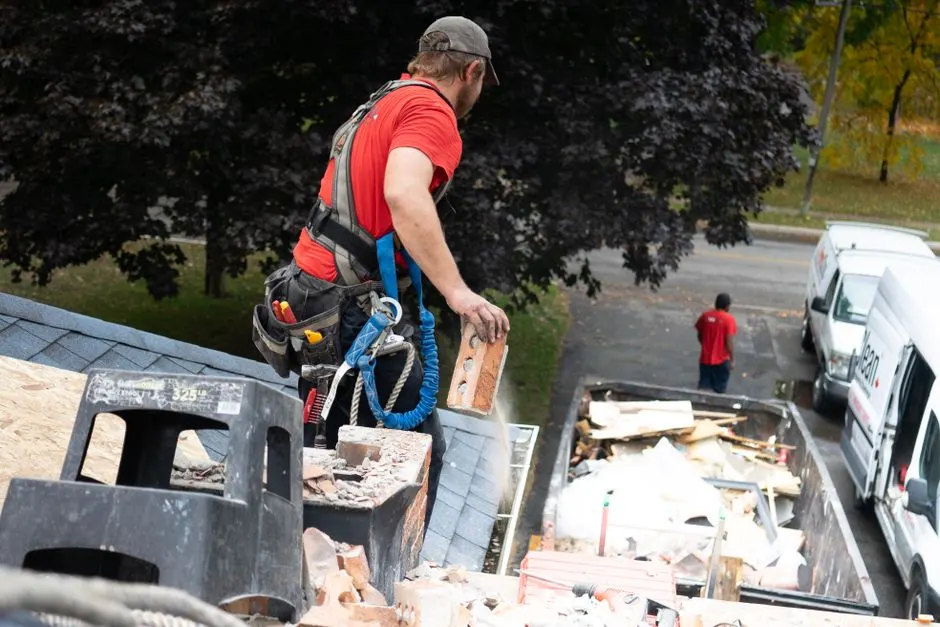
Spray foam removal in Seaton Carew is the process of extracting cured spray foam insulation from a loft, roof, cavity wall or outbuilding so the structure can breathe, be surveyed, or be sold. Most homeowners here only look into it after a mortgage lender or surveyor flags the foam - usually on a 1930s to 1970s terrace or semi between the seafront and Seaton Carew Road. This guide covers what it costs in 2026, why lenders care, how we extract the foam, and the mistakes that turn a £1,800 job into a £4,000 one.
Why Seaton Carew homes end up with spray foam in the loft
Seaton Carew sits right on the North Sea, and that coastal position is the single biggest reason spray foam gets installed here. Salt-laden air, driving rain off the front, and the cold easterly wind that comes in every winter all push homeowners toward any insulation product that promises to stop draughts and cut heating bills.
Spray foam was sold hard across Hartlepool and County Durham between roughly 2010 and 2018, often under government-backed green scheme branding. A two-man crew could fill a 40-square-metre loft in a single morning, and the homeowner was told it would pay for itself in three winters. On a detached house near the promenade, that pitch is tempting.
The problem is what happens underneath. Spray foam expands to 30-100 times its liquid volume and bonds to whatever it touches - felt, battens, rafters, wiring, even the back of plasterboard. Once it cures, it seals the roof space. Warm, moist air from the kitchen and bathroom rises into the loft, hits the cold underside of the roof deck, and condenses. Trapped moisture rots timbers and rusts the nails holding your tiles on.
We see the same pattern in neighbouring areas. Homeowners we work with on Spray Foam Removal in Headland describe identical symptoms - a loft that smells damp in October, tiles that lift in a February gale, and a surveyor who refuses to sign off. The foam itself is not the villain. The lack of ventilation is.
How much does spray foam removal cost in Seaton Carew?
Typical 2026 pricing for spray foam removal in Seaton Carew runs from £1,200 for a small open-cell loft up to £4,500 for a full roof-deck extraction on a larger semi, with most jobs landing between £1,800 and £2,800.
What moves the number is not the postcode. It is the type of foam, how much of the roof it covers, and how easily our technicians can reach it.
- Open cell foam, loft floor only: £1,200-£1,800. Soft, spongy, cuts out with a saw and vacuum.
- Open cell on the roof deck: £1,800-£2,600. More access equipment, more waste bags.
- Closed cell foam, roof deck: £2,400-£4,500. Dense, rigid, and bonded hard to the timbers.
- Cavity wall foam: £900-£2,200 depending on wall length and whether the outer leaf needs drilling.
- Waste removal and disposal: usually included; expect £150-£250 if you are outside our standard Hartlepool radius.
A standard 3-bed semi in Seaton Carew with open-cell foam across the rafters takes our team one to two days. Closed-cell on the same roof can take three. We quote a fixed price after a free loft inspection, so the number you agree is the number you pay.
Do homeowners in Seaton Carew need spray foam removal?
You need spray foam removal in Seaton Carew if a mortgage lender, surveyor or insurer has flagged the foam, if your loft timbers are damp or rotting, or if you are selling and the buyer's survey has come back with a retention. Those are the three triggers that account for almost every job we do here.
Mortgage lenders are the big one. Most high-street lenders treat spray foam applied directly to the underside of a roof deck as a defect, not an improvement. Their surveyors cannot confirm the condition of the timbers underneath, and they cannot confirm the roof has adequate ventilation. The result is a declined mortgage, a reduced offer, or a retention held back until the foam is gone and the roof has been inspected.
If you are buying or selling in Seaton Carew right now, this matters. A retention of £5,000 against a £180,000 house is common when spray foam is present and undocumented. Removing the foam and getting a clean survey is usually cheaper than accepting the retention.
The second trigger is genuine damp. If your loft smells musty in autumn, if you can see dark staining on the rafters, or if the foam has started to pull away from the timbers, the moisture problem is already active. Left alone, it spreads into the ceiling joists and the top of the wall plates.
For homeowners across the wider town we handle spray foam removal near me Hartlepool jobs every week, from single lofts to full terraces. If you are unsure whether your foam is a problem, book an inspection before you spend anything.
Is spray foam removal in Seaton Carew different from Hartlepool?
Spray foam removal in Seaton Carew is not fundamentally different from Hartlepool, but the coastal exposure does change how we work. Seaton Carew properties face more wind-driven rain and more salt in the air, which means ventilation detailing after removal matters more here than it does two miles inland.
The housing stock is similar - plenty of 1930s semis, post-war terraces, and a handful of larger detached homes along the front. What differs is the weather load. A roof that would dry out fine in Hartlepool town centre can stay damp for weeks in Seaton Carew because the prevailing wind pushes moisture into the roof space rather than pulling it out.
That is why we always check and, where needed, improve the ventilation path before we close up a job. On most Seaton Carew roofs that means confirming the eaves gap is clear, checking for high-level ventilation, and making sure no insulation is blocking the airflow at the wall plate. We also look at the felt. Older bitumen felt that has been cooked by foam for a decade often needs replacing at the same time.
If your property is closer to the town centre, our team covers Spray Foam Removal in Hartlepool Town Centre on the same schedule, and the extraction method is identical. The difference is in the follow-up - coastal homes get a closer look at the roof covering and the eaves.
How we remove spray foam from a Seaton Carew roof or loft
We remove spray foam by cutting it out mechanically, bagging it, and vacuuming the loft clean, then treating the timbers and restoring ventilation. There is no chemical that dissolves cured spray foam safely, so anyone promising a spray-on remover is selling you a problem, not a solution.
Here is the sequence our technicians follow on a typical Seaton Carew job:
- Inspection and access. We photograph the foam, measure coverage, and check the timbers for rot and the wiring for damage.
- Protection. Dust sheets and negative-pressure extraction keep foam particles out of your living space. We work from the loft down, never the other way round.
- Mechanical extraction. Open-cell foam comes out with insulation saws and a high-volume vacuum. Closed-cell foam needs a different approach - see below.
- Timber treatment. Any mould or rot is treated, and rotten sections are cut out and replaced.
- Ventilation check. We confirm the eaves and high-level vents are clear and that the roof can breathe again.
- Waste removal. Everything is bagged and removed the same day. You get your loft back empty.
Closed-cell foam is the harder job. It is dense, rigid, and bonded to the rafters with a grip that open-cell foam never achieves. For those roofs we use dry ice blasting spray foam removal Hartlepool, which freezes the foam until it goes brittle and then lifts it off the timber without gouging the wood. It is faster than hand-cutting on large roof decks and leaves a cleaner surface for the next stage.
For smaller lofts where the foam is on the floor rather than the rafters, we use standard loft spray foam removal Hartlepool equipment - saws, vacuum, and a lot of bags. Either way, the loft is left clean enough for a surveyor to inspect the timbers directly.
Common mistakes we see on Seaton Carew spray foam jobs
The most common mistake is trying to remove spray foam yourself with a scraper and a bin bag. It looks straightforward for the first square metre. By the third, you have torn the felt, gouged a rafter, and filled the house with fine foam dust that settles on every surface.
Other mistakes we see regularly:
- Removing the foam without fixing the ventilation. The foam comes out, the roof still cannot breathe, and the damp returns within a year.
- Ignoring the wiring. Spray foam hides cables. Cutting blind risks nicking a live conductor.
- Skipping the timber survey. If rot has started, removing the foam just exposes it. It still needs treating.
- Using the wrong disposal route. Spray foam waste is not general household waste. It needs proper bagging and a licensed tip.
- Assuming the mortgage lender will accept a removal quote. Lenders want the work done and a clean survey, not a promise to do it later.
One more: leaving the foam in place and simply adding ventilation. That can work on open-cell foam in a well-ventilated loft, but on a sealed roof deck it does nothing. The foam has to come out.
When to call a professional
Call a professional the moment a lender or surveyor raises spray foam, or the moment you smell damp in the loft. Those two signals almost never resolve on their own.
You should also call us if you are planning to sell within the next 12 months, if your roof has started leaking around the foam, or if you have found foam in a cavity wall that was injected under an old green scheme. Cavity foam is a different extraction job from loft foam, and it needs a different set of tools.
Summit Ready Spray Foam handles spray foam extraction across Seaton Carew and the wider Hartlepool area. We inspect for free, quote a fixed price, and leave the loft clean enough for a mortgage surveyor to sign off. If you are not sure whether your foam is a problem, get the inspection first - it costs you nothing and it tells you exactly where you stand.
Frequently Asked Questions
How much does spray foam removal cost in Seaton Carew?
Expect £1,200-£1,800 for a small open-cell loft, £1,800-£2,800 for a typical 3-bed semi with foam on the roof deck, and £2,400-£4,500 for closed-cell foam. Cavity wall foam runs £900-£2,200. Prices include waste removal and a ventilation check.
Do homeowners in Seaton Carew need spray foam removal?
Yes, if a mortgage lender or surveyor has flagged it, if the loft timbers are damp or rotting, or if you are selling and the buyer's survey has raised a retention. Otherwise, open-cell foam in a well-ventilated loft can sometimes stay - get an inspection to be sure.
Is spray foam removal in Seaton Carew different from Hartlepool?
The extraction method is the same, but coastal exposure changes the follow-up. Seaton Carew roofs face more wind-driven rain and salt, so we pay closer attention to eaves ventilation, felt condition, and roof covering before we sign the job off.
Who does spray foam removal in Seaton Carew, County Durham?
Summit Ready Spray Foam covers Seaton Carew and the wider Hartlepool area, including Headland, West View, and the town centre. We handle open-cell, closed-cell, loft, roof, and cavity wall foam, and we work to mortgage lender standards.
Can you remove spray foam the same day?
Small open-cell loft jobs can be done in a single day, and we offer same-day and out-of-hours slots when a lender deadline is tight. Larger closed-cell roof decks usually need two to three days. Call and we will tell you honestly what your roof needs.
Get help with Spray Foam Removal in Hartlepool
If your Seaton Carew home has spray foam in the loft, on the roof deck, or in the cavity walls, we can inspect it, quote it, and remove it - usually within the week. We work to the standard mortgage lenders expect, and we leave the loft clean for the surveyor.
Call Summit Ready Spray Foam on 0142 921 7017 to book a free inspection. If you are buying or selling and the clock is ticking, tell us the deadline and we will work around it.