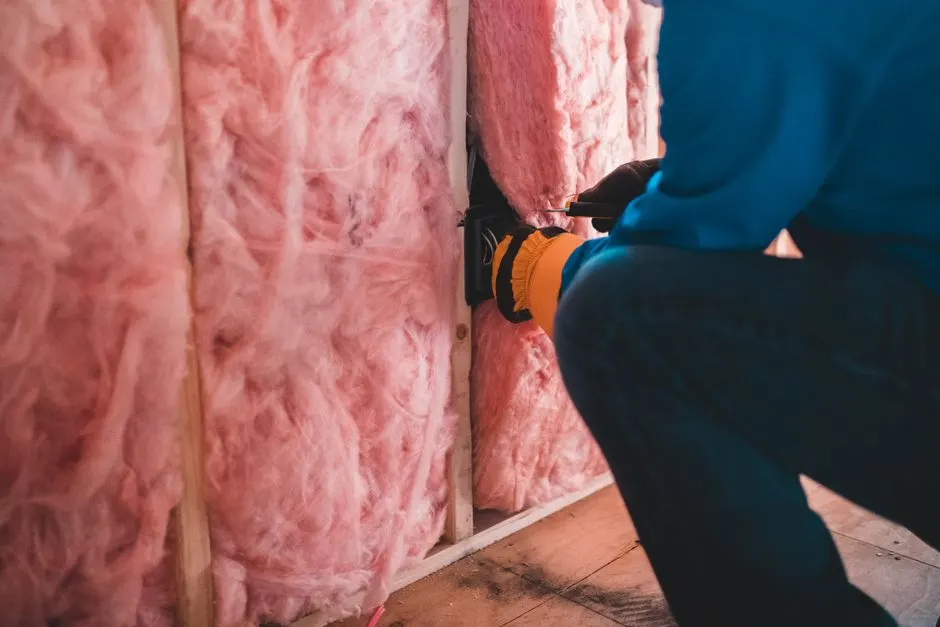
An insulation assessment before spray foam removal is a physical survey of your loft, roof void or cavity that identifies the foam type, its coverage, its condition and how it will come out - and in Hartlepool it takes 45 to 90 minutes and costs £150 to £350 in 2026. You book it because a mortgage lender, a buyer or your own nose has told you something is wrong up there, and you need facts before anyone starts cutting. The rest of this post walks through exactly what our surveyors do on the day, what you get back, and what a fair price looks like.
What an insulation assessment actually is
An insulation assessment is a documented site survey that records what insulation is present, how it was installed and whether it can stay or has to be removed. It is not a sales visit and it is not a quote - it is the evidence base that both sit on.
Spray foam is the usual reason people call us. Between the 1990s and the 2010s thousands of UK homes had open cell or closed cell foam sprayed into lofts and roof slopes as a cheap draught-proofing fix. Lenders have since tightened up. If a valuer sees spray foam on the underside of a roof deck, most high street lenders will either refuse the mortgage or hold it until the foam is gone and the roof has been re-inspected. That is why an assessment is now a standard step, not an optional one.
We run these surveys across the town, from the terraces around Spray Foam Removal in Hartlepool Town Centre to the post-war stock out at Spray Foam Removal in Owton Manor. The buildings differ, the foam problems rarely do.
What happens during an insulation assessment in Hartlepool
During an insulation assessment in Hartlepool we inspect the loft, roof void and any accessible cavity, then test the foam by hand and with a moisture meter before writing up a removal plan. Here is the running order.
1. Access and safety check
We lift the hatch, check the loft floor is safe to walk on, and look for anything that changes the job - a cracked ceiling joist, a shared party wall, a boiler flue running through the void. If your loft has no boarding and the joists are buried under 300mm of loose mineral wool, we note that too, because it affects how much foam we can actually see.
2. Foam identification
Open cell foam is soft, spongy and you can push a finger into it. Closed cell foam is rigid, dense and feels like set expanding glue. The distinction matters: closed cell foam is roughly twice as hard to remove and often needs a different method. We photograph both types where they meet, because mixed installs are common in Hartlepool terraces that were topped up in stages.
3. Coverage mapping
We measure the sprayed area in square metres and mark where the foam touches the roof felt, the rafters, the purlins and any electrical cable. Foam bonded directly to felt is the worst case - it traps moisture against the timber and that is where rot starts. We also check whether the foam has bridged the eaves gap and blocked ventilation, which is the single most common cause of damp in these roofs.
4. Moisture and timber readings
A calibrated moisture meter goes onto the rafters and the felt in at least six spots. Anything above 20% wood moisture content gets flagged. We have pulled foam off rafters in Hartlepool that read 28% underneath and 12% on the exposed end - that gap is the whole story of why the foam has to come out.
5. Ventilation and insulation audit
We record what else is up there: mineral wool depth, any PIR boards, the condition of the felt, whether there are tile vents or a breathable membrane. If the loft needs new insulation after the foam comes out, that goes in the report so you are not paying for a second survey later.
6. Removal method and access route
Finally we work out how the foam leaves the building. Loft hatches, stairwells, scaffolding, and whether the job suits mechanical extraction, dry ice blasting spray foam removal Hartlepool or hand tools. This is the part that decides the removal price, so it gets measured properly rather than guessed.
How long does an insulation assessment take in Hartlepool?
A standard loft or roof insulation assessment in Hartlepool takes 45 to 90 minutes on site, and you get the written report within 24 to 48 hours. A straightforward 3-bedroom terrace with foam on one roof slope is at the 45-minute end. A dormer bungalow with foam across two slopes, a blocked eaves gap and no loft boarding runs closer to 90 minutes.
Cavity wall foam assessments take longer - usually 2 to 3 hours - because we need to drill test holes at intervals along the elevation and inspect with a borescope. We do those as a separate booking.
Same-day assessments are possible if you call before midday and you are inside the Hartlepool ring road. Outside that, next-day is normal.
How much does an insulation assessment cost in Hartlepool?
Typical 2026 pricing in this area is £150 to £350 for a residential loft or roof assessment, and £300 to £600 for a cavity wall assessment with borescope inspection. The price depends on access, roof complexity and how much of the void is actually reachable.
- Standard loft, single roof slope: £150-£200
- Loft plus two roof slopes or a dormer: £220-£300
- Full roof void with limited access or scaffolding: £300-£350
- Cavity wall with borescope and drill tests: £300-£600
- Commercial or warehouse units: quoted per site, usually £450 upwards
We credit the assessment fee against the removal invoice if you go ahead with us. If you do not, you still keep the report and you can hand it to any other contractor or to your lender. That is deliberate - you should be able to shop the removal around with real numbers in hand.
If you are dealing with a lender, ask them early whether they want a specific format. Some want the report to name the foam type and confirm full removal; others want a post-removal roof inspection certificate. We cover that side of things under mortgage lender spray foam removal Hartlepool, and it is worth reading before you commission anything.
The report you should receive afterwards
A proper assessment report is 4 to 8 pages and should contain all of the following. If yours arrives as a one-page quote with a price on it, you have been sold to, not surveyed.
- Photographs of the foam, dated, with a scale reference.
- Foam type - open cell or closed cell - and where each type appears.
- Measured coverage in square metres, split by roof slope or area.
- Moisture readings for timber and felt, with locations.
- Ventilation findings: eaves gaps, tile vents, membrane condition.
- A removal method recommendation with the reasoning behind it.
- An itemised removal cost and an estimated duration.
- Any making-good needed afterwards - new felt, replacement insulation, plaster patching.
We also note anything that is not our work to fix, such as a cracked rafter or a failed flashings, so you can get it priced separately rather than discovering it mid-job.
What to watch out for
The most common mistake we see is homeowners accepting a removal quote without an assessment, then getting a mid-job price rise once the contractor finds closed cell foam instead of open cell. The second is assuming the foam can stay if it looks dry on the surface.
- Surface-dry foam hiding wet timber. Foam is a sponge on the outside and a sealed lid on the inside. The rafter underneath can be soaked while the foam face reads fine.
- Quotes based on floor area, not foam area. A 60m² loft might only have 18m² of foam. You should be paying for the foam, not the footprint.
- No mention of ventilation reinstatement. If the eaves gap stays blocked after removal, the damp comes back within a season.
- Cash-only surveys with no report. Your lender will not accept a verbal opinion, and neither will a future buyer.
- Removal that damages the felt. Pulling closed cell foam off felt by hand tears the membrane. That is a re-roof, not a removal.
If you are working through a sale, get the assessment done before you exchange. We have seen chains collapse over a £2,000 foam removal that could have been identified and priced six weeks earlier.
When to call a professional
Call us when a lender has flagged spray foam, when you can smell damp in a room below a foamed roof, or when you are buying a house with foam in the loft and no paperwork for it. Those three situations cover most of the assessments we run in Hartlepool.
You should also call if the foam is closed cell, if it is bonded to roof felt, or if it has been sprayed over electrical cable - all three need proper extraction rather than a DIY scrape. Our team at Summit Ready Spray Foam handles the assessment and the removal as one job, so the report and the quote come from the same pair of hands.
For larger properties, we also survey and clear warehouse spray foam removal Hartlepool units and commercial roofs, where the foam area is often measured in hundreds of square metres and the access planning takes as long as the removal itself.
Frequently Asked Questions
What happens during an insulation assessment in Hartlepool?
We inspect the loft or roof void, identify the foam type, measure coverage, take moisture readings from timber and felt, check ventilation, and work out the removal method and access route. You get photographs and a written report within 24 to 48 hours.
How much does an insulation assessment cost in Hartlepool?
Residential loft and roof assessments run £150 to £350 in 2026. Cavity wall assessments with borescope inspection cost £300 to £600. The fee is credited against your removal invoice if you book the work with us.
Do I need an insulation assessment before spray foam removal in Hartlepool, County Durham?
Yes, if a lender or buyer is involved, and strongly advisable in every other case. It confirms the foam type, the extent of the problem and the true removal cost, so you are not quoted blind and hit with a mid-job increase.
How long does an insulation assessment take in Hartlepool?
45 to 90 minutes on site for a standard loft or roof. Cavity wall surveys take 2 to 3 hours because of the drill tests. Same-day slots are usually available if you call before midday.
Can the foam stay in place if the assessment says it is dry?
Sometimes, but rarely where a mortgage is involved. Most high street lenders want spray foam removed from roof decks regardless of condition. If the foam is open cell, thin and the timber reads under 20% moisture, we will tell you so in writing.
Get help with Spray Foam Removal in Hartlepool
We survey, report and remove spray foam across Hartlepool and County Durham, and we will tell you straight whether the foam has to come out or can stay. One call books the assessment, and you get the report whether or not you use us for the removal.
Call Summit Ready Spray Foam on 0142 921 7017 to book your insulation assessment.